Thursday, October 28, 2010

Home Theater Subwoofer Wiring A B

AMANCO PAMPA


Limeñísimo name for a stamp Creole restaurant

A beautiful house in Miraflores recovered by Roca Rey / Recharte provides a framework for a new Peruvian restaurant with traditional homemade breath. The Pampa de Amancaes has recovered renovated with ceramic floor tiles decorated Talavera style, the carved wooden writing desks of the ancestors, the 'crisper' wood brought from Spain for three hundred years, the beautiful pictures in stone colonial Huamanga, some watercolors Master of Seville and the stone basin filled with pisco hosts special occasions. It carefully note in the decoration and attention to detail, for example, large linen napkins and table covering sobremantel. Music rather than environmental, their presence is evident with waltzes, polkas and seafaring to decibels above the conversation.
In the kitchen is the young Renzo Miñán, graduated with first place in the School of Chefs of San Ignacio and seasoned in various cuisines of the medium. However, primary responsibility rests with Marilu Recharte, owner of the restaurant and hotel trade. She, along with Sixtilio Dalmau and Johnny Schuler, created in the INAT Trujillo (now Cordon Bleu Peru), and then, in partnership with Johnny, he commanded El Palmar, also in Trujillo.
Last week Amancaes Pampa Blanca was in March. What is White March? It is a public test period, to adjust the timing of the kitchen, the waiters rid and see which dishes are best reception of the diner. Before the tests were done among friends and relatives, are now open to anyone willing to pay a fixed amount to enjoy a full menu (a promotion price), in both cases the term implies a certain kindness to overlook the lack of control. Pampa Amancaes
In the kitchen is well tuned, the flavors are defined and the proposal, although classic, there is room for reinterpretation. The ceviche and causes incorrect, without itching the first and the second filled with chicken, perhaps betting on a tourist market that does not participate in excess. Funds are dishes to be reviewed, as ossobuco, and other well made as the lining of tacu tacu of caramelized root vegetables has an interesting contrast between sweet and earthy. The risotto with duck breast to the northern is a good example of tradition and modernity, while the chef cooked duck taking a risk of coming out unscathed. The desserts are divine nectar for confectioners (not my case). I heard praise for the ranfañote comments, sighs, chocolate soufflé, rice with milk and foot pecans. I stay home with the porridge, rich in fruits controlled acidity and thickness to the point.
cellar deserves special mention, equipped with hundreds of bottles of high turnover and excellent quality / price.

sheet: Address: Av Armendariz 546, Miraflores. Phone: 4455099. Average price per plate www.pampadeamancaes.com: S /. 25-30 soles. Capacity: 90 people. Hours: Monday to Sunday lunch and dinner.

Friday, October 8, 2010

Can You Centrifuge Milk

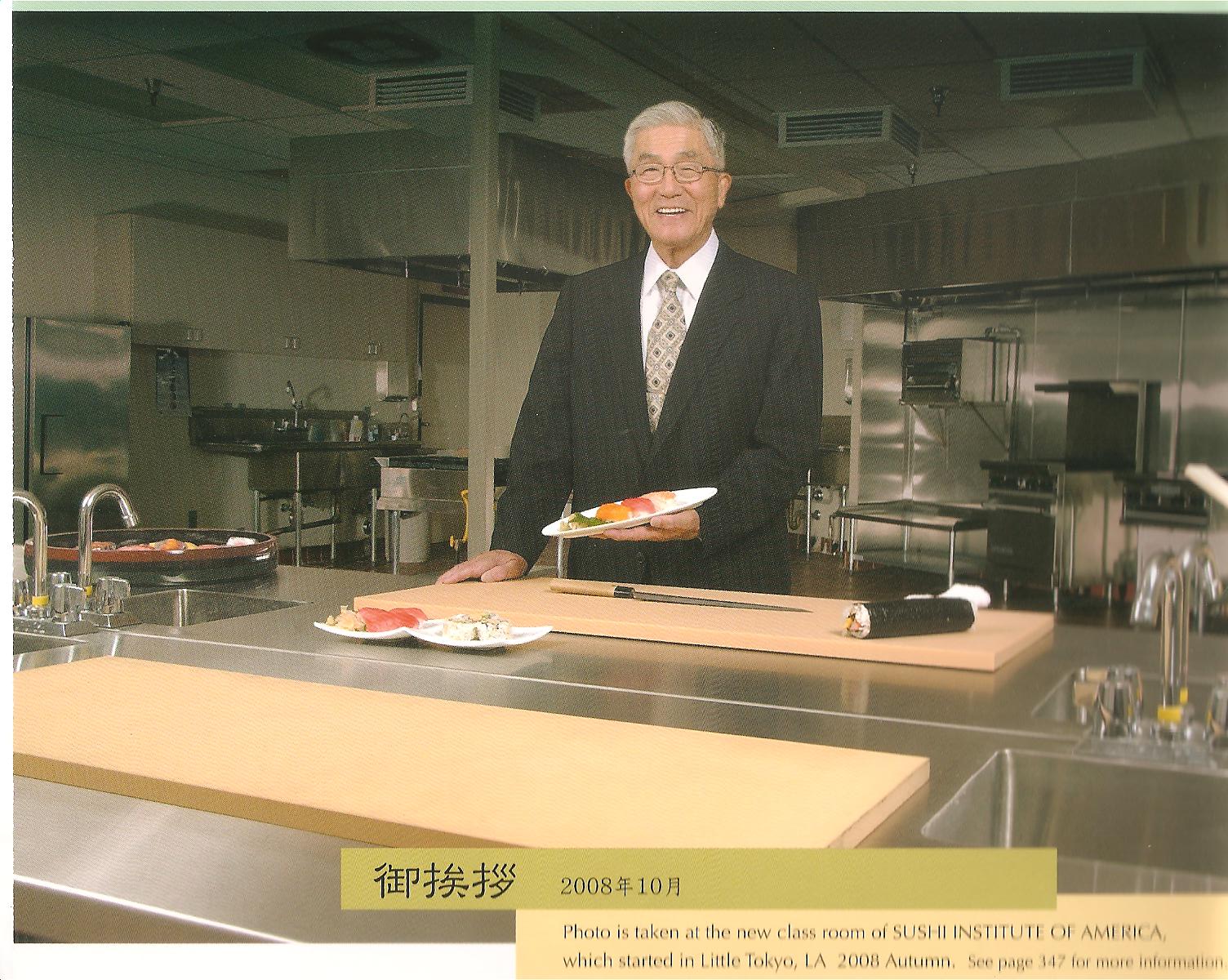
THE FATHER OF SUSHI


The Honorable Noritoshi Kanai, president of Mutual Trading Company's powerful, has a life of romance.
Born in Tokyo in 1923 in the midst of a relatively wealthy family ya que sus padres era maestros de escuela primaria (en Japón es una profesión que da para vivir con tranquilidad). A los 20 años el Ejército Imperial lo reclutó para pelear en la Guerra del Pacífico y lo nombraron responsable del suministro de alimentos y productos básicos para las tropas en lugares remotos de la selva. Kanai se enfrentó a increíbles obstáculos (entre ellos, ser prisionero de guerra en Birmania durante un año) para cumplir su misión de la que dependía el sustento de miles de soldados. Ironías de la vida, fue en este período de dificultades donde Kanai obtuvo los conocimientos básicos en la producción de alimentos, logística y manejo de diferencias geográficas, climáticas and multicultural, who later became an international businessman and "Culinary Ambassador of Japan in America."
In 1951 along with his partners founded the company Tokyo Mutual Trading Co. to Japanese food export to the United States and in 1964 emigrated to Los Angeles to take over management of the company. Cultural and gastronomic shock was evident. East eat soy, Western barley there is fish dish every day, here is the preferred meat. Sake / wine, vegetables / chips, quality / quantity, raw / cooked. A new food culture began to develop in America, where Kanai enter the Japanese culinary arts and the concept of a diet healthy. It was the first to import the Edamame and Regional Sake Fino United States.

Driven by the fascination of its food, in 1966 put a small sushi bar in Little Tokyo, and through it the sushi fashion spread to the world. This bar was thought as the typical Japanese sushi-house, that favor the warm and personalized attention, with a sushi man for every five guests (in Japan is three, in the U.S. every seven). Eating raw fish was a challenge that led to success as true hosts of guests Norwegian, Jewish, English, Italians and Americans increasingly filled the room. Replicate the experience in New York and in the blink of an eye the world turned sushi-addict.
In 2008, he founded the Institute Kanai U.S. Sushi Katsuya Uechi together with an extraordinary itamae and leader in the industry. Today, this school is a place of learning and training for professional cooks, and that conveys the true Japanese culinary art form to future generations. In Japan, sushi man
learn the trade in ten years. "You have to know how to move constemente because food is not prepared to hand but the whole body," says Kanai with Oriental patience. "The rice is molded with fingers while watching the diner is. There you realize if the rice needs to be more compact and what texture should give to disarm in the mouth. Another prerequisite is a good memory. A client is never forgotten, nor the customer or to your taste "he adds. Noritoshi Kanai
visited Lima last few months as part of his Latin American tour. He came quietly and left quietly after trying countless souer pisco, ceviche and high class tiraditos in various parts of our city that made him really happy. Kanai
's career has been recognized with several awards, not only as a businessman but as a promoter of the arts, music, literature and sports. A real teacher.

Thursday, September 30, 2010

7 Weeks Pregnant And No Foetal Heartbeat,why

The Peasant

Several times I have enjoyed the cuisine of The Peasant Piura. Fond memories of their green tamales, the duck dry and sweat of grouper. And so I told a English friend of our food lover with whom I visited the restaurant a few days ago. What happened to us completely disappointed to the point of eating a few bites and leave the dishes almost intact when leave the table? It is true that a huariques not be judged with the criteria of a signature restaurant, but it is unforgivable that the dishes get cold at the table, the duck is so hard that it is impossible to sink his teeth or the texture yield tamalito velvet by a watery mass and reporting. I got the impression that being 2 pm. the dishes were already served or languishing in pots without fire that stoked. What happened to the time of Dona Sebastiana? What happened to the regional nature of their signature dishes?
I will not criticize the size of the portions, so that three or four people are satisfied, or the price (S /. 40 average per dish), but to warn those who come and want to try some more dishes. Rest on its laurels is the worst that can happen to who represents one of the great cuisines of Peru.

Thursday, September 16, 2010

Poultry Farming Bussiness Plan


José Carlos Capel is the most respected food writer and head of Spain Madrid Fusion, the most important gastronomic event in the world. Author of some forty titles, Capel was at Mistura, took the temperature of our extraordinary Gaston Fair and invited to testify as a restaurateur in the prime time of the 2011 Madrid event.

His culinary training is not, how does the cooking?
I graduated in economics, but the kitchen naturally attracted me since childhood and I was good, I had fun. In 1975 I formed a dining club in Madrid much like the "shock" that was in the Basque country where only men cooked. Women could enter, but men who were cooking. I was rehearsing dishes and meals for my friends. Then worked in a publishing office of my father, but I was bored a lot, or I started writing food articles in magazines and I ended up writing books and making critical food column in The Country. I've been writing 23 years without missing a week and no one tells me anything, which is a tremendous victory.
What flavors you back to childhood?
On my birthday my mother asked me what to eat, and I always said potato omelette, meatballs and ham croquettes, sometimes potato salad and stuffed squid for an exceptional day. Years have passed and I are going crazy baby squid, tortilla and meatballs.
critic Do you think one looks to rediscover these flavors?
No. I have lived with these flavors, but mentally I've joined the revolution that took place in Spain from the year 92 with Ferran Adria. My thinking is that of a boy of 30 years, because the modern kitchen grabbed me from the beginning, but at the same time, I relish the traditional cuisine. Sometimes I feel like the critic Anton Ego in Ratatouille that at some point you to tears with the dish that you bring to the table. The good kitchen is always excited me.
There is much debate between tradition and modern cuisine. What is your position?
currency if There can be no tradition. Modernity must be understood as an evolution of tradition. The most respected chefs and more tradition known are the furthest advanced. The avant-garde cuisine of Spain is known by heart the traditional dishes and from that tradition evolve naturally, because you can not paint without knowing how to draw. That dominates the traditional bases can not be creative.
What is a food critic?
taste is a counselor, someone who influences the currents of opinion of a group of society if they get to have hearing and be respected, otherwise the critic becomes what the French call "chroniqueur" is ie, a reporter, a journalist who reports without trial if you think critically and make a blunder. There is nothing worse for a critic who does not connect with the audience that you read because that is the biggest snub professional, the work must be serious enough to warrant respect. In
blog and social networks proliferate worldwide spontaneous critics. How see this phenomenon?
've hit the mark with the word "critics of spontaneous generation." Springing up like mushrooms in the field, overnight, they lack knowledge, thoroughness, rather than relate one thing to another stay in "I like / I do not like." And who cares if you like it or not. Critical to many restaurants have to know, read many books, travel the world and have money to pay bills in restaurants. In the culinary world there are few good blogs, serious, no more than 5 or 6 in the world, the more we raise the level of criticism has less influx blog.
How has criticism since you started today?
depends on the country of which I speak. In Peru there is no criticism in Spain have reached a point where we are running almost critical because the chefs have a tremendous force and no one dares to criticize a chef level, it is to have the guts to do it. A critic must be feared, respected and hated.
How the English revolution is brewing in the 90's, as well as the mushrooms in the field?
It is a process of evolution, of situations that create a breeding ground. I lived this history that began in France in the early seventies with the nouvelle cuisine. In 1975 Gault-Millau critics describe as nouvelle cuisine movement that was breaking the mold of French cuisine. The 76 were held in Madrid a round table-driven food magazine Gourmet Club attended by Juan Mari Arzak, Pedro Subijama, Paul Bocuse and Raymond Oliver. They say that something is changing in the world of cooking and things are not going to stay the same. Then, in 1977 Arzak, Subijama and eight found the new Basque cuisine. The rallying cry was "the green sauce has no flour" which was a declaration of intent to ease the traditional English cuisine had a lot of fat, flour, starch and carbohydrates. Begins an evolution that has gripped society and expands in the eighties, a golden decade of change and transformation, not knowing where we were, without knowing the next step. Fashion after fashion, shift after shift, in introducing new trends: the herbs, sour cuisine, the cuisine of aromas. Everything was unfolding in connection with France, until in the nineties Ferran Adria bursts that completely revolutionizes the way you cook. He had drunk from the fountains of France suddenly says to "create the copy does not" close the books and is dedicated to thinking about another type of cuisine based on three pillars: a cosmetic, dietary change and look ironic about their own food, play food, play with food, sense of humor. Unknown dishes began to conceive based on the incorporation of texturing for light meals. Starts a revolution that becomes a worldwide phenomenon. But like everything else, false creators have emerged, so that we have entered a period of reflection about where we go.
And have glimpsed the way?
Things are changing very quickly. In the 2011 Madrid Fusion tried to collect the trends of the world. It does not matter the beauty of the dish, it is important to be true. The truth means that the products are authentic. Kitchen spoken naturalist Kilometer Zero ECOCINE, anyway.
I have the impression that there is a sort of Western cuisine Orientalization
That is also another influence, the merger and the orientalizazión are phenomena that originate from two thousand years have affected everyone, but curiously oriental chefs will also towards westernization, despite being a very traditional cuisine and to some extent very closed.
Do you think that one can speak of a Latin Americanization of world cuisine with our own techniques and products? Neither
Peru or Mexico are modern techniques, so there is great cuisine with raw materials. Peru have to incorporate techniques such as cryopreservation (cooking to 96 degrees below zero) and devices like the Roner, the rotary evaporator, the rotobar, the Pacojet. Come to a full kitchen, a global kitchen where it joins the African with Swedish, Asian with Latin America. A total fusion cuisine.
What surprised Madrid Fusion 2011?
currently Spain is the reflection of the latest trends that are happening in the world. In the next Madrid Fusion will present six new techniques never used before anywhere in the world. For example, cooking at high pressures, flavored with the steam in a closed environment, microencapsulation or enanoencapsulación that produces extremely thin sauces. Is the union of science with the kitchen, which is far from being forwarded advanced. Arzak is developing an electronic kitchen beautiful concept, is an outpost of impressive recipes reengineering.